Electronics This Week: Apple Ships, Local AI Gets Real
· admin

By Unicore Wholesale Editorial Team
Reporting period: September 14–20, 2026
Featured photo: Karla Vidal via Unsplash.
Tech news usually arrives in two speeds: loud launch-day promises and the slower changes that actually affect what we buy. This week had both. Apple’s September hardware moved from presentation slides to Canadian checkout pages, a capable local AI agent arrived on Windows, and a Chinese memory maker said its newest production process had reached volume manufacturing.
The useful question is not which announcement sounded biggest. It is which one should change a buying decision in Canada today. In most cases, the honest answer is “only if you already needed an upgrade.”
At a glance
| Development | Status by Sept. 20 | Canadian detail | Who should care |
|---|---|---|---|
| iPhone 18 Pro, Watch Series 12 and Ultra 4, AirPods 5 | Released Sept. 18 | Listed for purchase by Apple Canada | Apple users whose current battery, camera or watch no longer meets the job |
| Perplexity Portable Computer for Windows | Released Sept. 14 | No Canadian subscription price stated in the announcements | Workstation owners with an RTX GPU and at least 24 GB of VRAM |
| CXMT fifth-generation DRAM platform | Manufacturer says mass production has begun | No immediate Canadian product or price change announced | Device makers, resellers and buyers watching memory supply |
Apple’s launch week became shipping week
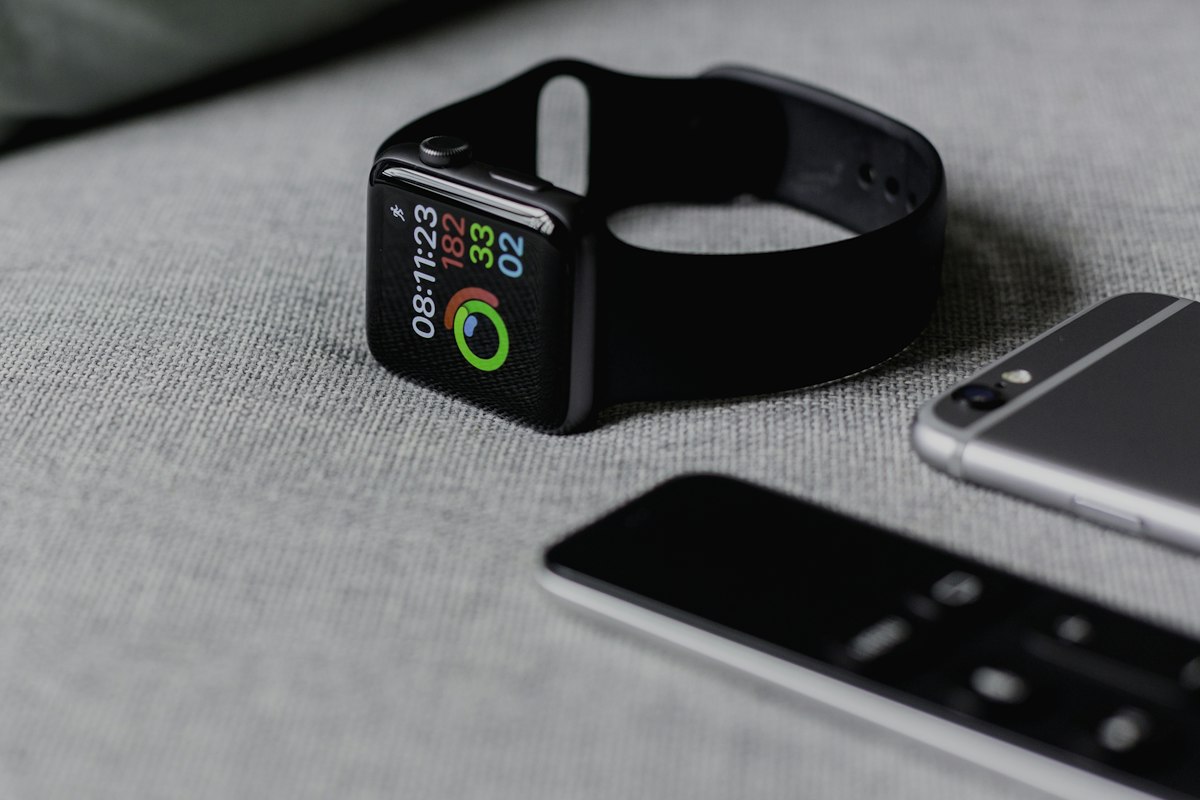
Apple said the iPhone 18 Pro and Pro Max, Apple Watch Series 12, Watch Ultra 4 and AirPods 5 reached stores worldwide on Friday, September 18. The Canadian store pages are live with prices and ordering, so these are released products—not preorders dressed up as availability.
The iPhone 18 Pro line starts at C$1,749. Its practical upgrades include the A20 Pro chip, a 48-megapixel main camera with four variable-aperture settings and, on the Pro Max, up to 45 hours of claimed video playback. Those are meaningful changes for mobile photographers and people stretching a phone through long workdays. They are not an automatic reason to retire a recent Pro model that still has a healthy battery.
Apple Watch Series 12 starts at C$549, while the Ultra 4 starts at C$1,099. Apple rates them for up to 24 and 50 hours of normal use respectively. The less expensive watch is likely the sensible choice for most iPhone owners; the Ultra premium makes more sense when its longer endurance, tougher case, precise GPS or diving features solve a real problem.
AirPods 5 cost C$179, or C$209 with the wireless charging case. Both versions now include active noise cancellation. The base model is rated for four hours with ANC on, while the wireless-case version gets five hours and adds volume swiping. One small but easy-to-miss detail: neither box includes a USB-C cable or power adapter. Budget for one only if you do not already have a compatible cable.
All prices above are Apple Canada list prices in Canadian dollars; taxes and configuration choices can raise the total. Carrier offers may change the arithmetic on the phone, but compare the full contract cost rather than the tempting monthly number.
Local AI reached Windows—but not ordinary PCs

On September 14, Perplexity released Portable Computer inside its Windows app for compatible Nvidia systems. It is a local version of the company’s multistep agent: it can work across files and connectors for services including Outlook, OneDrive, Word, Google Drive, Gmail, Slack and GitHub. Nvidia says locally completed work stays on the PC and does not use Perplexity Computer credits; if a task needs a cloud model, the app asks permission before sending information off-device.
That privacy pitch is interesting for professionals and small organisations handling sensitive documents, but the hardware footnote is the story. Portable Computer requires a GeForce RTX or RTX Pro GPU with at least 24 GB of VRAM. Tom’s Hardware also reports that a Perplexity Pro or Max subscription is required. Desktop cards such as the RTX 3090, 4090 and 5090 meet the stated memory threshold. Nvidia and Perplexity had not explicitly confirmed laptop-GPU support in the independent report we checked.
In other words, this is not a feature for the average “AI PC” on a store shelf. It is software for a fairly serious workstation or gaming tower. If local AI is part of a laptop or desktop purchase, ask how much VRAM the exact GPU carries; an AI badge, an NPU and a familiar model number do not answer that question. The announcements did not provide Canadian subscription pricing, so check the current Canadian checkout before treating the software cost as settled.
A memory shift that matters later, not at checkout today
Reuters reported on September 20 that Chinese memory maker CXMT says its fifth-generation DRAM platform has entered mass production. The company also unveiled two 24-gigabit LPDDR5X chips for phones and portable electronics. CXMT says each holds 50 per cent more data than its previous comparable products and that the platform can produce at least 50 per cent more gross dies per wafer than its prior generation.
Those are manufacturer claims, and “gross dies” is not the same as the percentage of good chips that pass final testing. Still, another large source of lower-power mobile memory could eventually broaden supply beyond Samsung, SK Hynix and Micron. That may matter to phone, tablet and thin-laptop makers over time. It does not mean Canadian device prices will drop next week; no specific Canadian products, customers or pricing were announced.
What was quiet—and why that is useful
Our September 14–20 source check did not find a new Canadian monitor or game-console launch that met this roundup’s verification bar. That restraint matters. Earlier trade-show announcements can keep circulating as if they are new releases, while demonstrations, preorders and store availability are three different things. This week’s graphics story is the new local-AI workload, not a newly released gaming GPU.
Practical buying guidance for Canada
- Replacing a phone: price the device, plan, trade-in and protection over the full term. A two- or three-year-old flagship with a battery replacement may still be the better value.
- Buying for school or office: prioritize memory, storage, battery condition, ports and warranty before paying for an AI label. For most people, 24 GB of graphics memory is unnecessary.
- Equipping a business: standardize on a small number of serviceable models and confirm return terms before placing a multi-unit order. A flashy one-off configuration can become an expensive support problem.
- Watching memory prices: treat CXMT’s announcement as a supply-chain signal, not a purchasing deadline. Retail effects depend on yields, customer adoption, trade rules and the Canadian dollar.
If the newest launch prices are more than your workload needs, compare the current selection in the Unicore Wholesale shop. Organisations sourcing several units can use the bulk inquiry form, and every buyer should read the returns, refunds and warranty policy before ordering. Availability changes, so confirm the live listing rather than assuming a product is in stock.
Sources and further reading
- Apple Newsroom: latest iPhone, Apple Watch and AirPods lineups arrive in stores — September 18, 2026.
- Apple Canada: iPhone 18 Pro purchasing and specifications.
- Apple Canada: AirPods 5 pricing and details.
- Apple Canada: Watch Series 12 and Ultra 4 pricing and details.
- Nvidia: Perplexity Portable Computer arrives on Windows — September 14, 2026.
- Tom’s Hardware: Windows requirements and subscription context — September 15, 2026.
- Reuters: CXMT’s new memory platform enters mass production — September 20, 2026.
Leave a Reply