Apple Comes Home as Fitbit Edge and iPhone Duo Arrive
· admin
By Unicore Wholesale Editorial Team
Apple spent this week trying to turn the living room into its next platform. That was the headline, but not the whole story: Fitbit found a new middle ground between a basic tracker and a smartwatch, Apple opened Canadian preorders for its first folding iPhone, Nvidia’s new RTX Spark class of laptops actually began shipping, and Amazon introduced a wearable that listens on purpose. Here is what changed from October 12 to 18—and what is worth waiting for.
The week at a glance
| Product | Status in Canada | Price | Practical date |
|---|---|---|---|
| Apple HomeView | Preorder | $429 CAD | Available Nov. 13 |
| HomePod mini 2 | Preorder | $199 CAD | Available Oct. 30 |
| Apple TV 4K (4th gen.) | Preorder | $429 CAD | Available Nov. 13 |
| Google Fitbit Edge | Preorder | $229.99 CAD | Available Oct. 27 |
| Apple iPhone Duo | Preorder | From $2,999 CAD | Available Oct. 23 |
| RTX Spark laptops | Shipping globally | From $2,599 USD; Canadian models vary | Released Oct. 16 |
| Amazon Bee Frontier | No Canadian launch confirmed | $74.99 USD | Available in the U.S. |
Apple wants a place on the kitchen counter
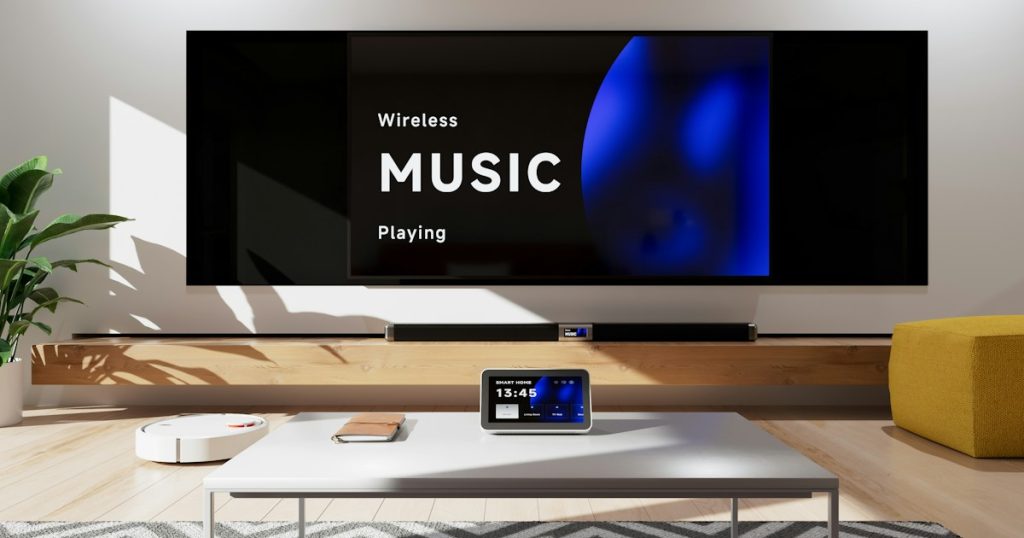
The new Apple HomeView is a seven-inch smart display that can control a home, handle video calls and recognize as many as six people. It costs $429 CAD, is available to preorder and reaches stores November 13. Tabletop and wall-mounted versions are included in the launch; optional wall connectors start at $79.95, while a Power-over-Ethernet connector is not due until early 2027.
The hardware looks useful, especially for households already deep into Apple devices. The catch is that Apple’s “personal context” features require a compatible, recently unlocked iPhone or iPad nearby. Siri AI launches in English, with Canadian French coming later. Apple also notes that some server-side AI functions may carry daily limits, with expanded access potentially requiring payment. In other words, do not buy the screen on the assumption that every software promise is unlimited or finished.
Apple also introduced a new Home Collection of compatible cameras and doorbells from LG and Schneider Electric. Canadian examples are not impulse buys: LG’s wired video doorbell is $349.95, its outdoor camera is $399.95 and the floodlight camera is $549.95. A complete Apple-centred security setup can become expensive quickly.
Featured image: Li Zhang / Unsplash.
HomePod mini and Apple TV get smarter—but not all at once
The HomePod mini 2 is $199 CAD and ships October 30. It adds an S10 chip, new colours and support for Siri AI, but that assistant arrives through a future software update. Apple’s new Apple TV 4K costs $429 CAD and lands November 13 with an A19 chip and far-field microphones.
There is good news for owners of recent Apple TV boxes: Siri AI in beta is also coming to second-generation Apple TV 4K hardware and newer. The much-promoted four-speaker surround arrangement, however, requires four new HomePod mini 2 units. That is $796 before the television box, and not a small upgrade for a feature Apple is presenting as simple.
Fitbit Edge fills the gap between tracker and watch
Google’s Fitbit Edge is available to preorder for $229.99 CAD and reaches stores October 27. It has built-in GPS, more than 40 exercise modes, ECG and irregular-rhythm notifications, skin-temperature and blood-oxygen sensing, 5ATM water resistance and a user-replaceable battery. It works with Android 11 or later and iOS 16.4 or later.
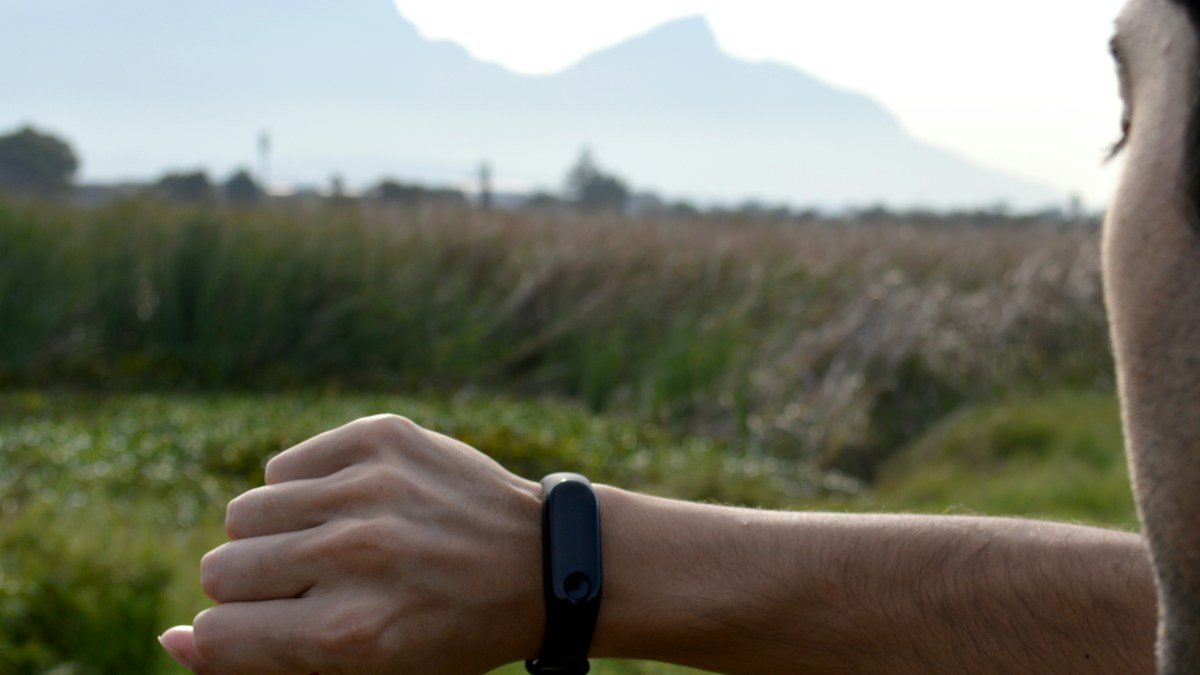
The hardware is the appealing part. The subscription story deserves scrutiny. Three months of Google Health Premium are included, but some analysis and health-trend features sit behind the service afterward. It is also a wellness device, not a medical instrument. Buyers should compare the cost over two years, not just the price at checkout.
iPhone Duo preorders turn the foldable into a $2,999 decision
Canadian preorders for iPhone Duo opened October 16, with availability on October 23. The 256 GB model starts at $2,999 CAD; 2 TB climbs to $4,799. Opened, it has a 7.6-inch folding display, while the outside screen measures 5.4 inches. It uses Apple’s A20 Pro chip, carries an IP68 rating and is eSIM-only.
The phone is technically interesting, but this is early-adopter money. Students, families and fleet buyers should wait for independent durability testing, repair pricing and a few months of hinge history. A device that replaces both phone and small tablet sounds efficient; a damaged $3,000 primary phone is the opposite.
RTX Spark laptops move from announcement to delivery
Nvidia says its first RTX Spark laptops began shipping globally on October 16 from Asus, Dell, HP, Lenovo, Microsoft and MSI. The platform offers up to 128 GB of unified memory and targets local AI work as much as gaming or content creation. Nvidia’s global starting point is $2,599 USD; Canadian pricing depends on the maker and configuration.
These are specialist machines, not the new default laptop. A developer running large local models may value the memory. An office buying web, accounting and video-call systems probably will not. The sensible procurement question is whether a workload actually needs local AI acceleration, not whether the badge sounds future-proof. It was otherwise a quiet week for standalone graphics cards and monitors, so there is no new reason to rush those purchases.
Amazon’s Bee wearable raises the obvious privacy question
Amazon introduced two portable AI listening devices on October 15. The $74.99 USD Bee Frontier is available in the United States; the $99.99 USD Bee Eclipse phone attachment is “coming soon.” Amazon has not confirmed Canadian pricing or availability.
Bee turns conversations into summaries, reminders and action items when recording is switched on. Amazon says audio is processed and deleted rather than stored, transcripts are encrypted, and a visible light signals recording. Reuters reports that standard retention is 14 days unless a $12-per-month plan extends it. Even with those controls, workplaces, classrooms and family gatherings need clear consent rules before anyone clips on a microphone that can transcribe the room.
What Canadian buyers should do this week
- Smart-home shoppers: wait until HomeView’s November 13 release and confirm which features work in your preferred language.
- Fitness buyers: price Google Health Premium before deciding whether Fitbit Edge is cheaper than a watch over time.
- Foldable-curious shoppers: do not confuse preorder availability with proven durability.
- Business buyers: match RTX Spark to an actual local-AI workload and get comparable Canadian quotes.
- Anyone considering an AI recorder: settle consent, retention and data-handling rules first.
For practical alternatives, browse the Unicore Wholesale shop. Organisations planning larger deployments can use the bulk-order inquiry; before purchasing, review the returns, refunds and warranty policy. Availability varies, and this roundup does not imply that the newly announced products above are in Unicore inventory.
Leave a Reply